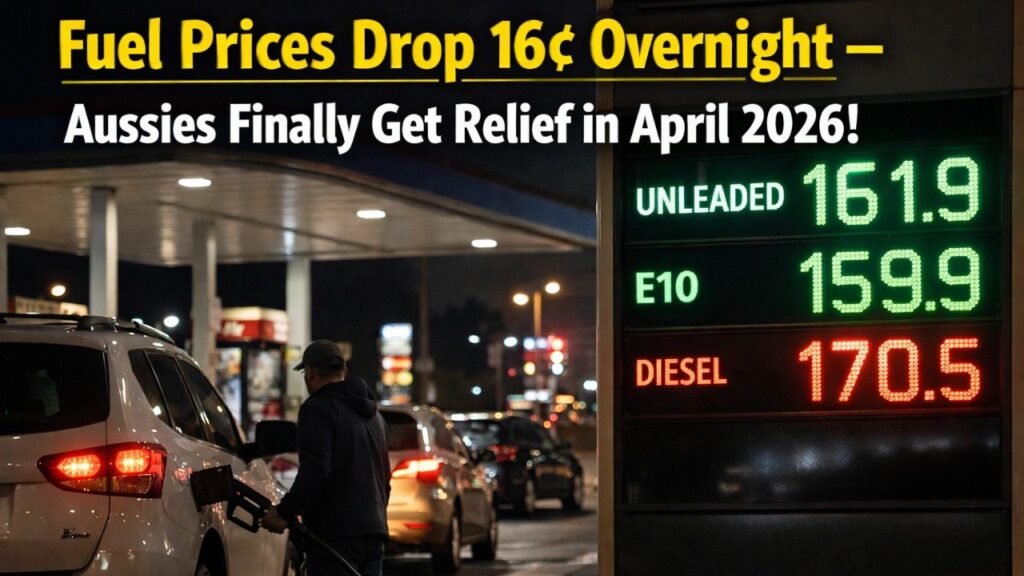
After months of steady increases that strained household budgets, Australians are finally seeing meaningful relief at the fuel pump. In a sudden overnight shift in April 2026, petrol prices across major cities fell by as much as 16 cents per litre, offering immediate savings for commuters, families, and businesses.
For many drivers, the drop was noticeable right away. Filling up a tank suddenly cost less, easing pressure on weekly expenses at a time when cost-of-living concerns remain high. While fuel prices have always fluctuated, a sharp overnight reduction of this size is significant enough to impact both personal finances and broader economic activity.

This latest shift is being closely watched by consumers and businesses alike, as even modest fuel savings can accumulate quickly over time.
What’s Changed in Fuel Prices Across Australia
The April 2026 price shift has been observed across several regions, with metropolitan areas experiencing the most noticeable reductions.
Here’s a clear overview of what has changed:
- Petrol prices dropped by up to 16 cents per litre in major metropolitan areas
- Average unleaded petrol now ranges between $1.78 and $1.85 per litre
- The change happened overnight, making it one of the fastest price movements in recent months
- Major cities recorded the largest reductions, while regional areas experienced moderate declines
- Diesel prices also fell, though typically by slightly smaller margins
- The drop appears to reflect a broader market shift rather than isolated station discounts

For regular drivers, even a small reduction in price per litre can translate into noticeable savings across weekly and monthly budgets.
Fuel Price Comparison: Before vs After the April Drop
The difference in fuel costs before and after the overnight shift highlights how widespread the reduction has been.
| Location | Before Drop (per litre) | After Drop (per litre) | Change |
|---|---|---|---|
| Sydney | $1.94 | $1.78 | -16¢ |
| Melbourne | $1.92 | $1.77 | -15¢ |
| Brisbane | $1.89 | $1.74 | -15¢ |
| Adelaide | $1.91 | $1.79 | -12¢ |
| Regional Areas | $1.95 | $1.83 | -8–12¢ |
These figures illustrate that while metropolitan areas received the largest cuts, regional communities also benefited from noticeable savings.
Why Fuel Prices Dropped So Suddenly

Fuel price movements are influenced by a mix of global and domestic factors. While consumers see changes at the pump, the underlying causes often originate in international markets and supply conditions.
Several key factors are believed to have contributed to the April price drop:
- Changes in global oil prices, which directly impact fuel production costs
- Improved supply levels, easing pressure on wholesale fuel markets
- Currency stability, helping reduce import-related expenses
- Market competition among fuel retailers, encouraging price adjustments
- Natural pricing cycles, which regularly cause fuel costs to rise and fall
Fuel pricing cycles are particularly important in Australia, where prices often fluctuate throughout the month. Sudden decreases are not uncommon, but the size of this drop makes it especially noteworthy.
How Much Drivers Can Save Each Week
The financial impact of a 16-cent reduction becomes clear when applied to typical fuel usage patterns.
For an average commuter:
- Weekly fuel usage: 40–60 litres
- Previous weekly cost: $77–$116
- New weekly cost after drop: $70–$106
- Estimated weekly savings: $6–$10
- Monthly savings potential: $25–$40
- Annual savings potential: Up to $400, depending on usage
While these savings may seem modest on a weekly basis, they add up significantly over time, especially for households with multiple vehicles.
What This Means for Household Budgets
Lower fuel prices create ripple effects across household finances. When transport costs decrease, families often find themselves with slightly more flexibility in their spending.
Key household impacts include:
- Reduced commuting expenses for daily workers
- Lower school transport costs for families
- Improved budgeting flexibility
- Slight relief in delivery-related expenses
- More predictable weekly spending patterns
For many households managing tight budgets, even small cost reductions can create valuable breathing room.
Impact on Businesses and the Wider Economy
Fuel prices do not only affect drivers — they also influence business operations and economic activity.
Industries that rely heavily on transport benefit immediately when fuel becomes cheaper. Logistics companies, delivery services, and supply chains often experience reduced operational costs during price dips.
Potential business impacts include:
- Lower transport and freight costs
- Reduced delivery expenses
- Improved short-term profitability
- Stabilized operational budgets
- Potentially slower price increases for goods and services
While these effects may not always be visible immediately to consumers, they contribute to broader economic stability.
Important Things Drivers Should Keep in Mind
Despite the welcome relief, fuel prices remain unpredictable. Drivers should avoid assuming that current prices will remain low for extended periods.
Here are key points to remember:
- Fuel prices follow cyclical patterns and may rise again
- Prices vary between suburbs and individual stations
- Monitoring daily price trends can help identify cheaper refuelling times
- Regional prices may remain slightly higher than metro areas
- Current prices are still higher than historical averages from previous years
Being aware of these factors allows drivers to make smarter decisions about when and where to fill up.
Smart Strategies to Maximize Fuel Savings
Taking advantage of lower fuel prices involves more than simply filling up when prices drop.
Consider these practical strategies:
- Track local fuel price cycles to identify cheaper days
- Refuel early when prices begin to decline
- Avoid filling up during peak pricing periods
- Combine errands to reduce total fuel usage
- Maintain proper tyre pressure to improve efficiency
Even small behavioural adjustments can enhance the financial benefits of lower prices.
Will Fuel Prices Stay Low in 2026?
Predicting long-term fuel trends is difficult because pricing depends on multiple external factors.
Several influences could affect future fuel costs:
- Global oil production levels
- International trade and supply routes
- Seasonal demand fluctuations
- Currency exchange rates
- Domestic economic activity
While current prices offer relief, long-term stability is never guaranteed in fuel markets.
Q&A: Fuel Price Drop April 2026
1. How much have fuel prices dropped in April 2026?
Fuel prices have fallen by up to 16 cents per litre in major metropolitan areas.
2. What is the current average petrol price?
Average prices now range between $1.78 and $1.85 per litre.
3. Did the drop occur nationwide?
Yes, reductions have been recorded across Australia, though regional areas experienced slightly smaller changes.
4. Are diesel prices included in the drop?
Yes, diesel prices also declined, but generally by a smaller margin than petrol.
5. Why did prices fall so quickly?
The decrease is linked to broader market conditions, including global oil supply changes and pricing cycles.
6. Will prices remain low?
There is no guarantee, as fuel prices are influenced by global market trends.
7. How long might the lower prices last?
Price drops may last weeks or months depending on supply and demand conditions.
8. Is this the lowest fuel price recently recorded?
It is among the most noticeable drops in the past year, though not the lowest historically.
9. Do fuel prices vary between locations?
Yes, prices can differ significantly between cities, suburbs, and individual fuel stations.
10. When is the best time to refuel?
Typically during the lower phase of the local fuel price cycle.
11. How much can drivers realistically save?
Savings vary by usage, but regular drivers may save several dollars per week.
12. Are fuel price cycles still relevant?
Yes, pricing cycles continue to influence daily fuel costs.
13. Could prices increase again suddenly?
Yes, increases can occur quickly due to international market shifts.
14. Does this affect inflation levels?
Lower fuel prices can help reduce certain cost pressures across the economy.
15. Should households change their budgets now?
It’s wise to treat current savings as temporary and continue planning conservatively.